

JNMI Students Has More Dropout Than The Pass-outs

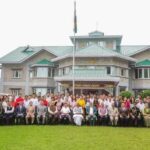
Jawaharlal Nehru Memorial Institute (JNMI), Boomtar Namchi, has educated 50 persons with disabilities. It was established on 15th September 1987 by National Association for the Blind (NAB), Sikkim Branch. NAB was running JNMI till 2014. Presently, it is under Women and Child Welfare Department, under Social Welfare Department, Government of Sikkim.
JNMI has 6 teaching and 32 non-teaching staffs and the Institute fully runs as residential school. It presently has 26 students registered to JNMI. JNMI has elementary classes, where the residents learn normal educations. The residents also learn the modes of communications for persons challenged with visualization and persons with visual impairment. JNMI residents take higher studies from nearby secondary and senior secondary schools.
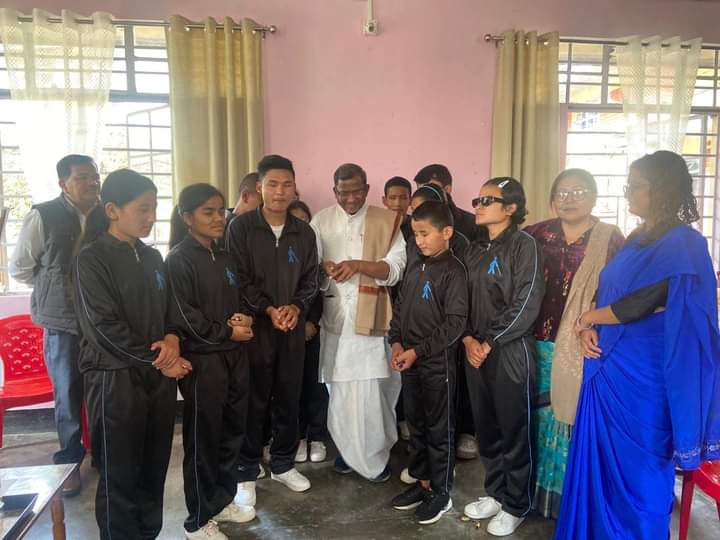
As per Alumni record of JNMI, more than 50 students have passing-out and drop-out students, till date. The past record has more dropout students than the passing-out students.
Studies and Educations For JNMI Residents
Arpan Rai, staff of JNMI, explains that the main reasons of the dropout students may be due to shame of old age. However, it is mainly because the institute was introduced much later, and JNMI had aged students in 1987. Arpan Rai reasons. The students would not study elementary, and could not take higher studies at the age of fifty.
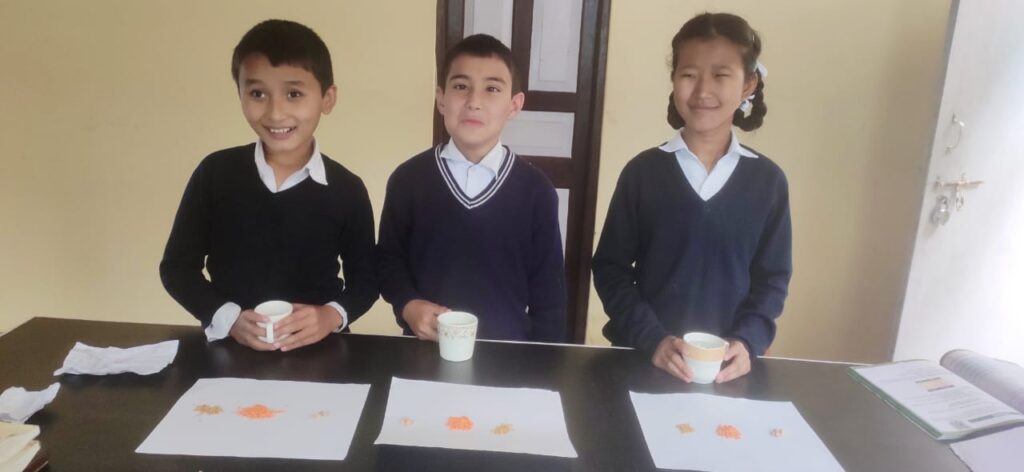
But in the later years, the students left JNMI to pursue basic skill trainings for making a living. Handloom, paper crafts, basic and advanced computer trainings, are some of the choices of trainings. Still others took joining in IGNOU in Delhi and Mumbai.
In Namchi, Namchi Senior Secondary School have special educators supporting the students who are challenged with sight. And PM Shri Namchi Girls Senior Secondary School has visually impaired Officer, UDC Norbu Lepcha, and teacher Uma Mukhia, looking after the students who are visually challenged. But the students have to take normal educations in the colleges and the accessibilities are still challenging in many infrastructures. And they usually opt out of studying them.
Employment and Acceptance
However, the social attitude and acceptance of the persons with disabilities for the employment is negligible in Sikkim. Sonam Diki Bhutia, President, Persons with Disabilities Community Sikkim, shares the difficulties of finding jobs in private sector by the persons with disabilities.
As far as the employment opportunities of the persons with disabilities are concerned, Government of Sikkim have employed most of them. However, the private companies in Sikkim are still not ready to take in persons with disabilities as employees, Sonam Diki Bhutia shares.
I prefer being called ‘person with disability’ rather than any other names, because, first, we are persons. And I accept my visual impairments, but I would rather be accepted as a person first, Sonam Diki Bhutia says.
Conclusion from the author
The Government of India has reserved 4 per cent of employment for the persons with disabilities. The education system and skills of the persons with disabilities are rapidly developing. And it is the time for the society to accept persons with disabilities with more openness. Only than, there will be the world where the persons with disabilities and normal people can have a perfect world to live.