
Sikkim Government Announces Multi-Tier Austerity Framework to Enhance Fuel Conservation and Administrative Efficiency
The Chief Minister Trying to Redefine Political Power Through Austerity. Sikkim Wants to Run Government Like a Lean Startup.
In alignment with the national call for fiscal prudence and resource optimization issued by Prime Minister Narendra Modi, the Government of Sikkim has initiated a comprehensive austerity framework aimed at strengthening fuel conservation, administrative rationalization, and sustainable governance practices.
In Indian politics, and for decades, the political authority in South Asia has been visually reinforced through convoys, escorts, and mobility privilege. Sikkim’s new austerity framework flips that logic: visibility itself becomes inefficiency.
The power, often seen before it is heard. Arriving in flashing pilot vehicles, security convoys, and long motorcades that cut through crowded roads. Sikkim, Chief Minister Prem Singh Tamang is attempting to reshape that image.
It also carries Sikkim’s unusual experiment: governing with less. The Government of Sikkim is attempting something unusual in modern Indian politics: reducing the visible machinery of power.
The experiment also highlights how smaller governments can act as agile policy labs. Unlike larger Indian states burdened by scale, Sikkim can rapidly prototype administrative changes that blend conservation with digital governance.
Chief Minister Prem Singh Tamang announced a 50% reduction of his official motorcade deployment as part of the State’s commitment toward responsible governance and national service obligations. The decision is expected to substantially reduce fuel expenditure and operational redundancies within official movement protocols.
Sikkim’s Austerity Push Signals Shift in the Culture of Governance
Beyond Symbolism: Sikkim’s Bid to Redefine Political Power Through Restraint
The decision comes in response to Prime Minister Narendra Modi’s call for resource conservation and disciplined governance amid growing concerns over fuel use and administrative expenditure.
The move, framed as part of a broader austerity effort inspired by Prime Minister Narendra Modi’s appeal for fuel conservation, signals more than an administrative decision. In a region where difficult terrain makes every journey expensive, the reduction of government movement carries symbolic as well as practical meaning.
But the announcement goes beyond symbolism.
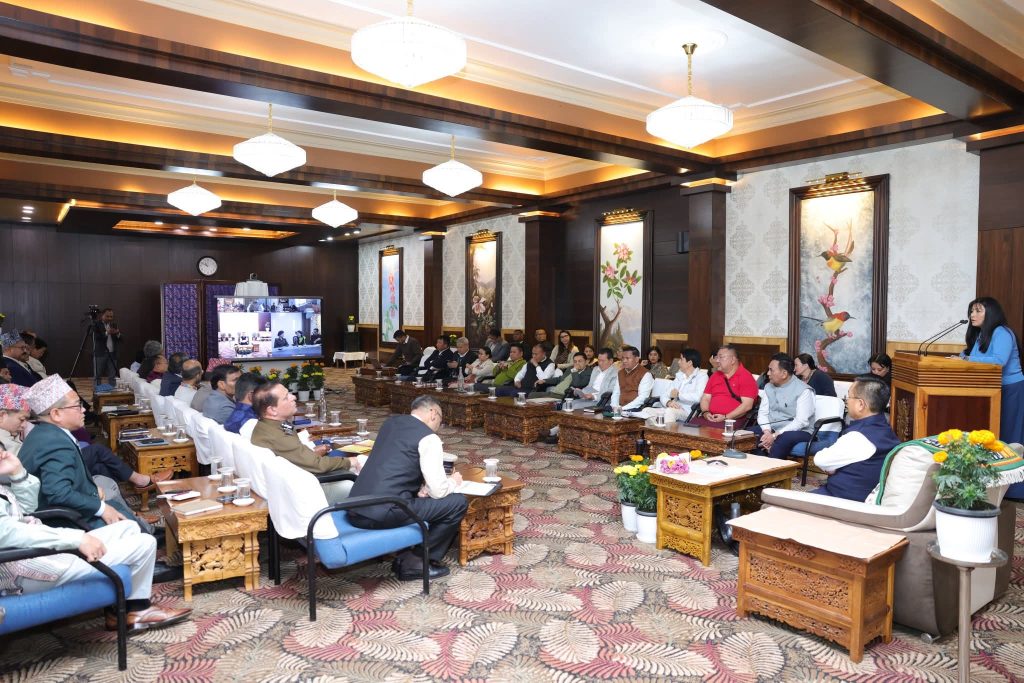
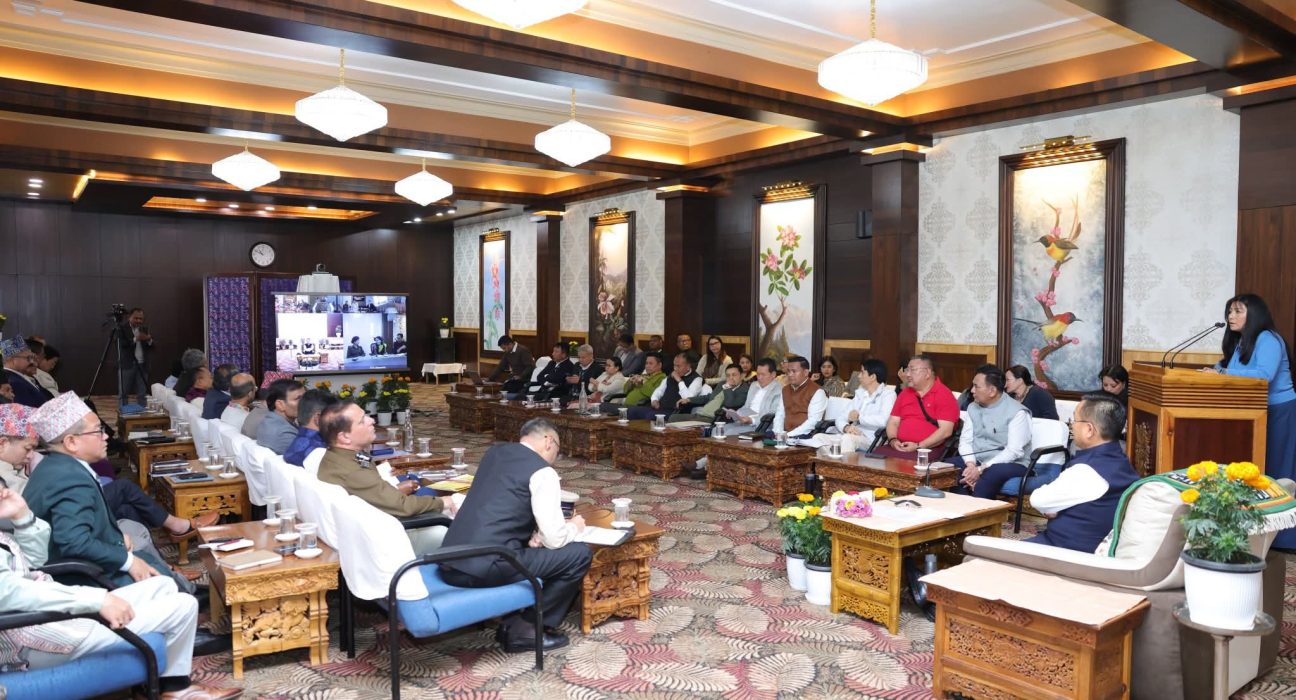
An emergency high-level consultative meeting was convened at Samman Bhawan with Cabinet Ministers, MLAs, the Chief Secretary, Director General of Police, Heads of Departments, District Collectors, and Superintendents of Police. Officials from various districts participated virtually to deliberate on temporary but strategic interventions designed to optimize resource utilization during the present national circumstances.
Among the major policy interventions adopted were the withdrawal of pilot vehicles assigned to the Hon’ble Speaker and Deputy Speaker, a 20% reduction in fuel allocations for Ministers and MLAs, and the introduction of pooled transportation systems across government departments.
In effect, Sikkim is attempting to ‘de-motorize’ bureaucracy.
At an emergency meeting held at Samman Bhawan, the state government unveiled a wider effort to rethink how officials travel, work, and govern. Reduction in fuel allocations for ministers and MLAs , withdrawal of pilot vehicles assigned to senior constitutional authorities. And the adoption of shared transportation systems by Government departments, and relying more heavily on virtual coordination
At Samman Bhawan, state officials mapped out a temporary governance model that feels partly environmental, partly economic, and partly behavioral.
Perhaps the most striking proposal is cultural rather than logistical: officials are being encouraged to walk to nearby meetings.
The State That Asked Its Bureaucracy to Travel Less
When Austerity Becomes a Political Message
The administration has also emphasized digital governance mechanisms through enhanced virtual coordination, reduced inter-district official travel, and wider adoption of public transport systems. Government employees will face restrictions on non-essential movement, while ‘Work From Home’ provisions for 50% of staff will be implemented wherever operationally feasible.
Additionally, the State will introduce an odd-even vehicular regulation mechanism across districts while suspending foreign travel for government functionaries for a period of one year. Weekend movement of government vehicles will also remain restricted except for emergency services, which have been exempted from all austerity-related limitations.
The reforms introduce: work-from-home arrangements for a large section of employees, suspending foreign travel for government officials for one year, and restrict unnecessary inter-district movements. And additional, an odd-even traffic system operating across districts, government vehicles will remaining off the roads on weekends except for emergency duties.
The message is carefully political. By reducing the spectacle of official privilege, the Sikkim government is positioning austerity not as weakness, but as public responsibility.
Whether these temporary measures produce lasting administrative change remains uncertain. But at a moment when citizens increasingly scrutinize how governments use public resources, Sikkim’s experiment may resonate far beyond the Himalayan state. As has been done for other measures before.
The real question is whether temporary austerity measures evolve into permanent operational redesign, or whether they disappear once fuel pressure eases. Whether these restrictions survive beyond the immediate moment is unclear.
Temporary Austerity or the Beginning of Administrative Reinvention?
What if Government Measured Power Through Efficiency Instead of Spectacle?Sikkim’s Experiment With Restraint Could Redefine the Optics of Power
Governments frequently embrace austerity during periods of pressure only to relax discipline later. Still, Sikkim’s decision suggests that even in Indian politics, where spectacle has long accompanied authority, smaller may now appear smarter.
Either way, Sikkim has introduced a provocative idea into Indian governance: that efficiency may now matter more than spectacle.
The Chief Minister appealed to citizens to extend full cooperation toward these measures, describing them as collective contributions toward national resilience, disciplined governance, and long-term sustainability.
The state has long promoted organic farming and eco-conscious tourism. Now, the government appears to be extending that ethic into governance itself. Asking whether political authority can also travel lighter across the mountains.