



SIKKIM HAS IDEAS. WHAT IT DOESN’T HAVE IS INNOVATION

At a student festival in Temi, a state minister calls out the gap between imagination and execution
As education spending rises and pass rates improve, the real challenge is turning curiosity into systems that work
Temi, April 15: In a room full of student prototypes, models, and ideas, Sikkim’s Education Minister Raju Basnet identified what he believes is the state’s most persistent blind spot: the inability to turn creativity into innovation.
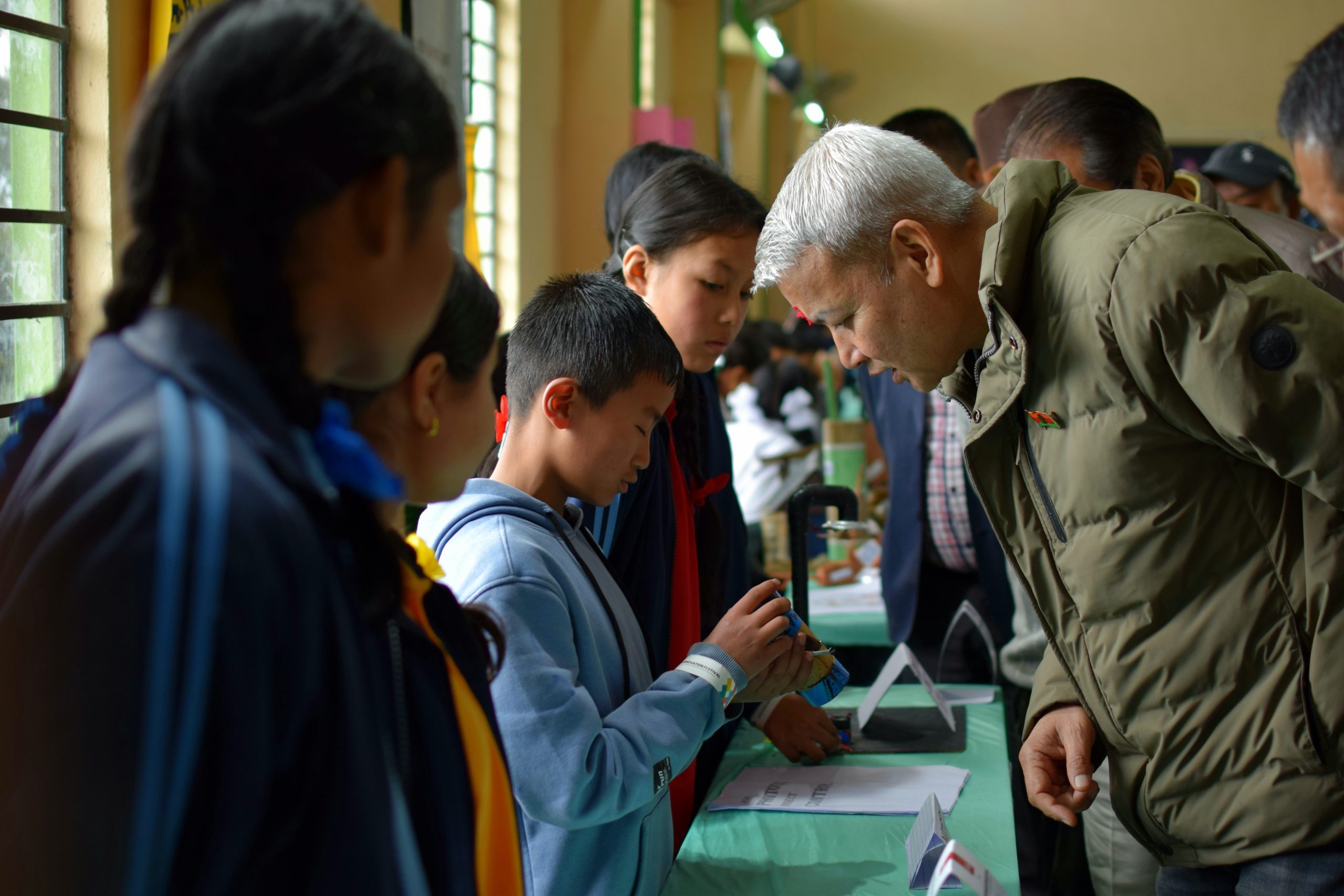
“Innovation is the last piece,” Basnet said at the Temi Innovation Festival. “It comes after curiosity, imagination, and craftsmanship. But it has to solve a real problem.”
That last condition, solving something real, is where most ideas fall apart.
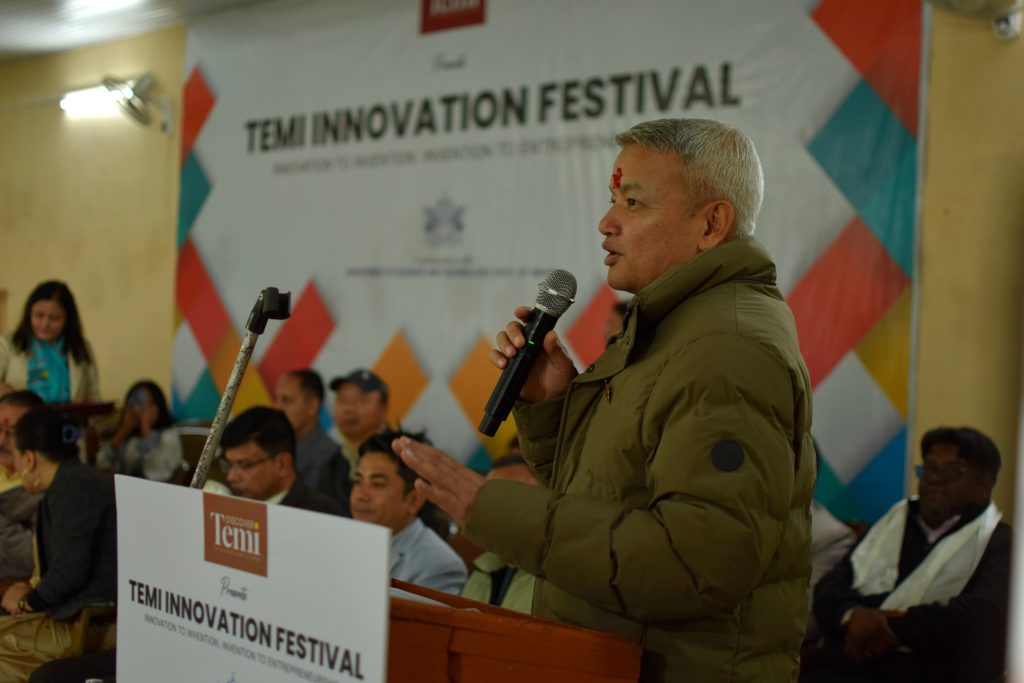
“Innovation is the last piece—after curiosity, imagination, and creativity.”
THE PROBLEM ISN’T IDEAS. IT’S EXECUTION.
The Discover Temi initiative, held April 15-16, brought together more than 30 participants from Namchi district and Nepal. Their projects reflected what modern education systems are increasingly good at producing: exposure, awareness, and conceptual thinking.
What they lacked, Basnet suggested, was something harder to teach. Their application. “There is creativity,” he said. “But innovation requires application.”
It’s a familiar problem, not just in Sikkim but across emerging education ecosystems. Students are encouraged to think differently, but rarely pushed to build something that works outside the classroom.
MOST ‘INNOVATION’ IS JUST REPACKAGING
Basnet’s critique didn’t stop with student projects. It extended to how society understands innovation itself.
“Take WhatsApp, Google, Facebook,” he said. “We call them innovations. But the internet was already there. “What changed wasn’t the technology. It was the interface.
These platforms succeeded not because they invented something entirely new, but because they made existing systems usable, scalable, and indispensable.
In other words, innovation today is less about invention and more about integration.
That distinction matters. Because it shifts the question from:
Can students come up with ideas?
to
Can they build something people will actually use?
AN EDUCATION SYSTEM BUILT FOR PASSING, NOT BUILDING
Sikkim’s education system is improving, at least by conventional metrics.
- Class X pass rates rose from 67% in 2024 to 80% in 2025
- The shift follows the launch of the Chief Minister’s Mentorship Programme
But these numbers reveal only part of the story. “We are ensuring students pass,” Basnet said. “But we don’t yet have data on those who perform exceptionally.” That gap is critical.
Because innovation ecosystems don’t emerge from average outcomes. They depend on identifying and pushing the edges of talent. Right now, that edge remains largely untracked.
₹2,200 CRORE LATER. WHAT DOES SUCCESS LOOK LIKE?
The state is investing heavily in education:
- ₹1,900 crore allocated for 2025-26
- Expected increase to ₹2,200 crore
New medical and engineering colleges are also in the pipeline. On paper, this looks like a system preparing for the future. But there’s a deeper question: What is the output of this investment?
Not just more graduates, but more builders, designers, problem-solvers. Without that shift, funding risks reinforcing the same system just at a larger scale.
BIGGER SCHOOLS, SAME QUESTIONS
Structural reforms are already underway. Basnet cited a government school where enrolment jumped from 80 to 400 after consolidation. The idea is simple: concentrate resources, improve efficiency, create better academic environments.But scale doesn’t automatically produce innovation.
In fact, larger systems can sometimes standardize thinking unless they are designed to do the opposite.
THE MISSING LAYER: LEADERSHIP THAT ENABLES RISK
Basnet pointed to a less visible constraint: leadership. The government is now looking for stronger leadership among school heads and teachers. Not just administrators, but people who can create environments where questioning is allowed and failure is tolerated.
Because innovation rarely comes from systems that reward only correct answers.It comes from systems that allow wrong ones.
SIKKIM’S INFLECTION POINT
What emerged at Temi wasn’t just a critique of a student festival. It was a snapshot of a system in transition. Sikkim has: improving access, rising pass rates, increasing funding
What it doesn’t yet have is a consistent pipeline from curiosity to creation to real-world impact
THE REAL QUESTION
The state doesn’t lack ideas. It lacks systems that turn ideas into outcomes. And until that changes, innovation will remain what it often is in classrooms everywhere. Something discussed, demonstrated, and displayed. But not built.
Read More from The Himali Journal: Explore more stories on education, youth, and changing systems across the Himalayan region.