


From Kachcha to Concrete: Mud house to SGAY
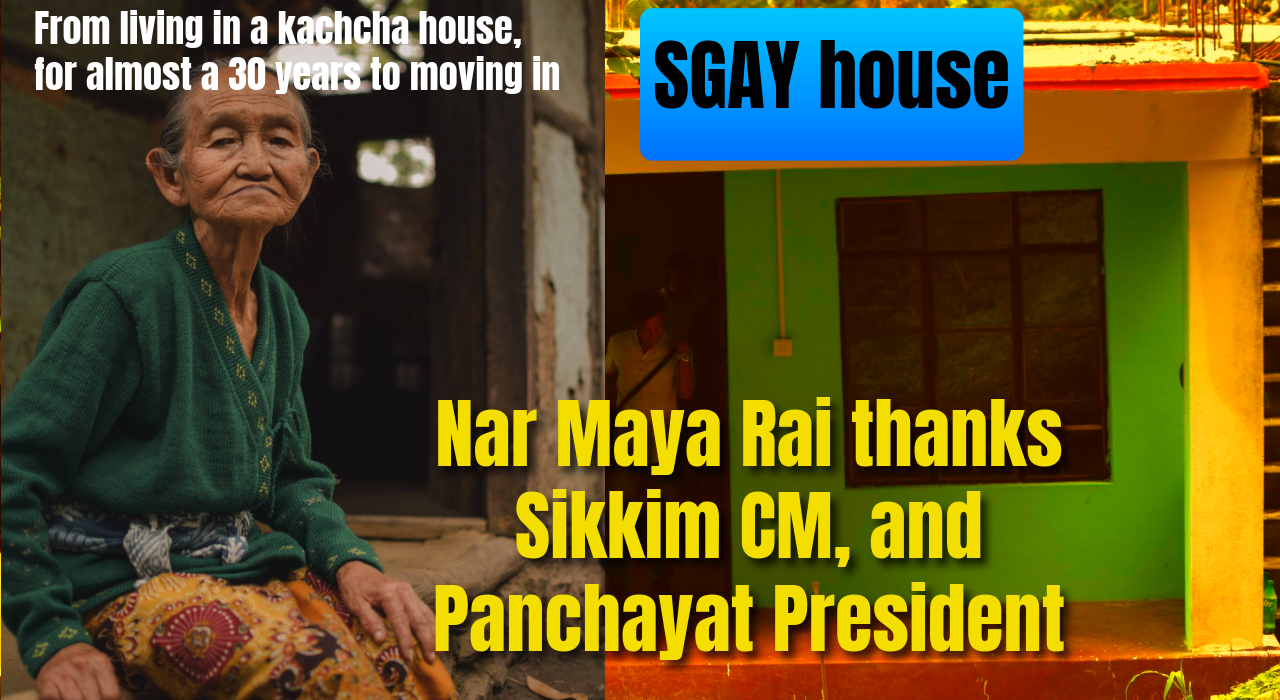
How a Panchayat Leader’s Personal Intervention Helped a 65-Year-Old Sikkim Woman Finally Own a Home
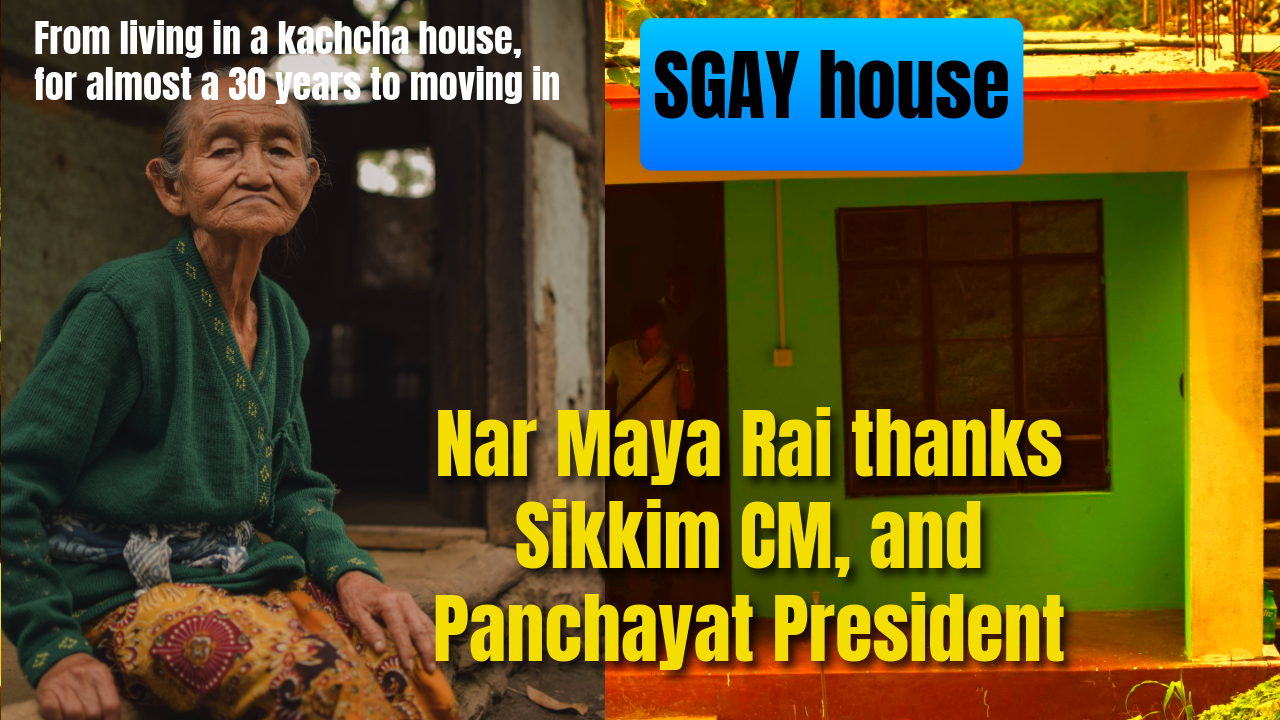
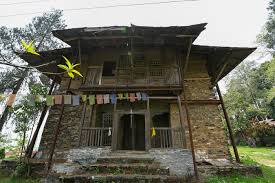
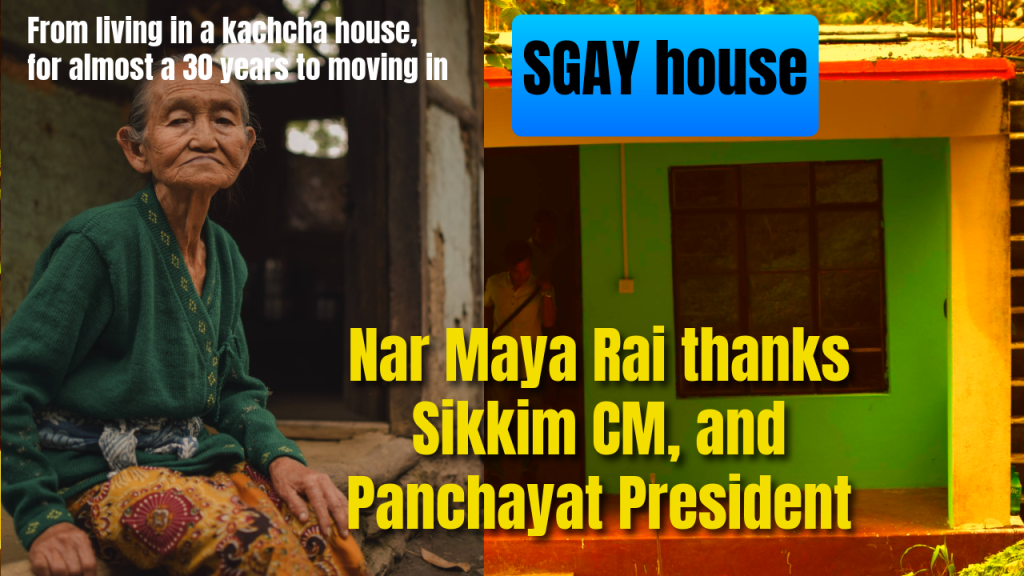
For nearly thirty years, Nar Maya Rai lived in a fragile kachcha house perched on borrowed land in Lower Kopchey Ward, under 33-Mikkhola-Singithang GPU in Namchi Block, South Sikkim. The house stood without security, without ownership, and without dignity. Its walls slowly dissolving with time, its roof giving way to rain, and its existence tied to uncertainty.
At 65, after a lifetime shaped by rural hardship, Nar Maya Rai is finally preparing to move into a pakka home, one she can call her own.
Her journey from exclusion to ownership is not just a personal story of resilience. It is also a rare and revealing example of how government welfare schemes, when combined with human intervention at the grassroots level, can transform lives in ways policy alone often cannot.
A Life Lived on Borrowed Ground
Nar Maya Rai belongs to the Below Poverty Line (BPL) category and is a domicile holder of Sikkim. Like many women in rural Himalayan regions, her life after marriage was defined by adaptation. Moving into her husband’s family network, settling on land that was not hers, and building a life without formal ownership.
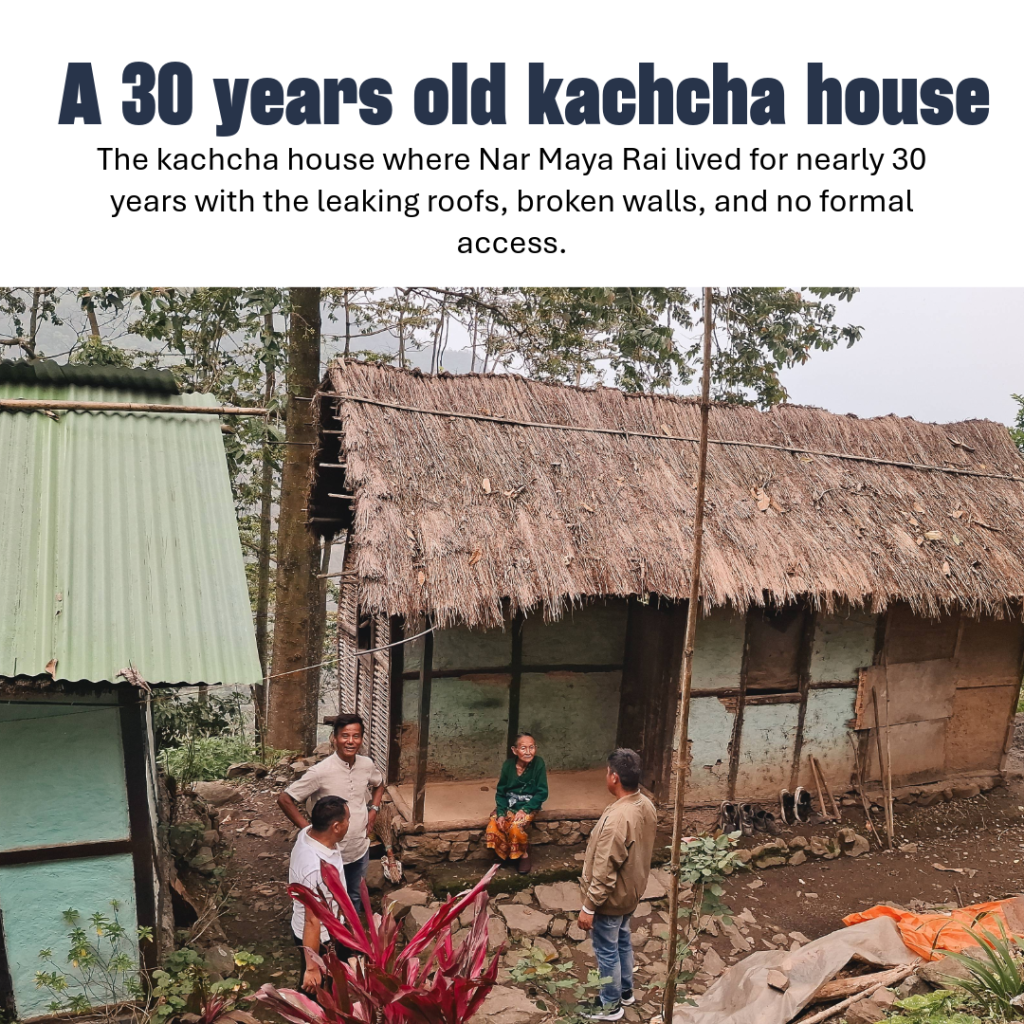
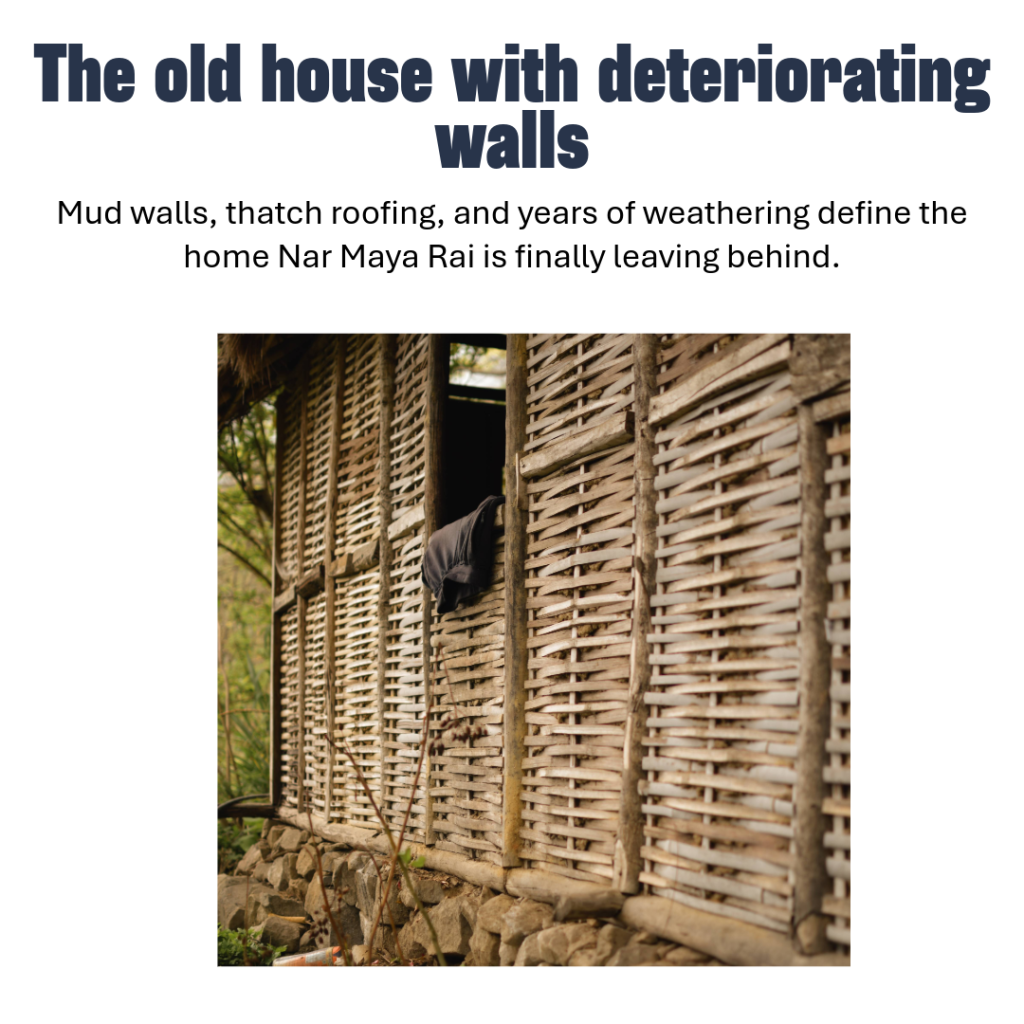
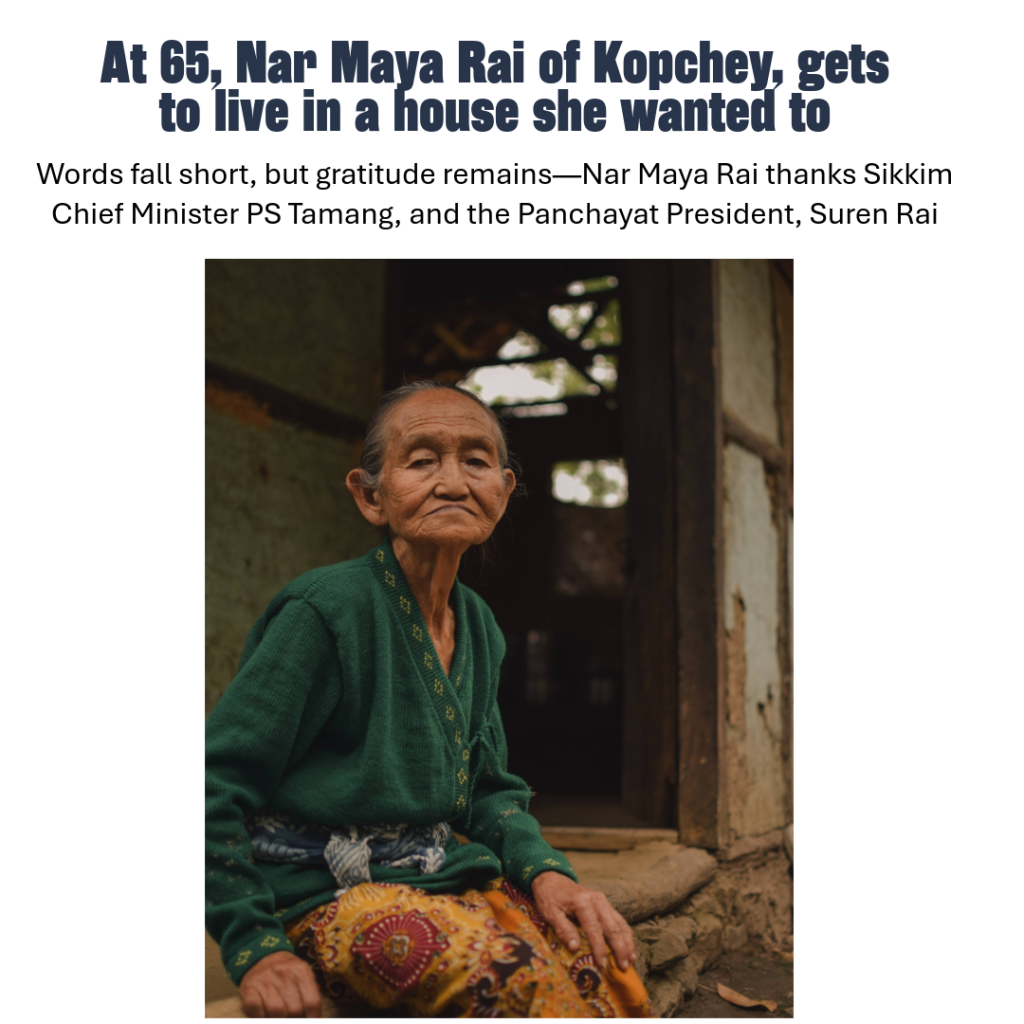
Her home in Kopchey was modest even by rural standards. Constructed from mud, wood, and thatch (khar), it had aged beyond repair. The roof leaked heavily during monsoon months, forcing the family to constantly shift belongings to avoid water damage. The mud walls, weakened by years of weathering, bore visible cracks. Windows were patched with cloth and plywood, offering little protection from wind or cold.

Access was another daily challenge. The house stood without a proper pathway, disconnected from the main road. Basic necessities, especially rations, required a steep walk of nearly two kilometers.
Livelihood was equally fragile. Her eldest son, Sandeep Rai, worked as a local mason, earning irregular wages that sustained the household. A few years ago, the family lost their only milk-giving cow in a forest fire, removing an additional layer of economic security.
For decades, this was life; precarious, uncertain, and largely invisible.
A Simple Wish
A few years ago, Nar Maya Rai approached the Panchayat President of her GPU, Suren Rai, with a request that carried the weight of her entire life.
“I have spent almost all my life in hardship,” she told him. “Now I wish to live in a better home.”
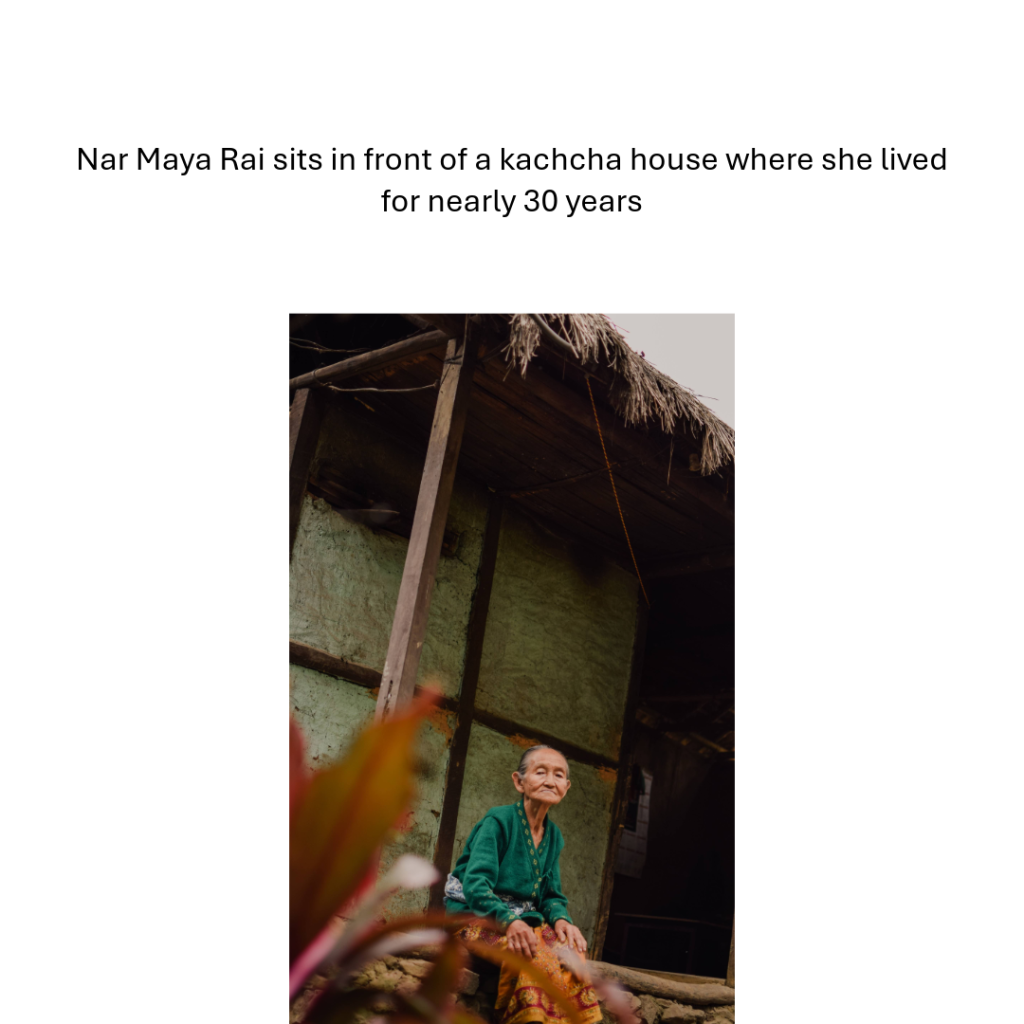
It was not a demand. It was a quiet appeal. One that reflected the aspirations of countless rural citizens who seek dignity, not luxury.
Her request set into motion a process that would eventually change her life.
The Promise of SGAY
The Sikkim Garib Awas Yojana (SGAY) is a flagship housing scheme aimed at providing permanent homes to economically weaker sections of society. Each house, estimated at around ₹19 lakh, includes not only structural construction but also essential household furnishings.
Through the initiative of Panchayat President Suren Rai, Nar Maya Rai’s name was included in the list of beneficiaries from Kopchey Ward. But there was a problem.
One of the fundamental eligibility criteria for SGAY is land ownership. Beneficiaries must have land registered in their name to qualify for housing support. And Nar Maya Rai had none.
Where Policy Meets Reality
Across rural India, land ownership remains one of the most significant barriers to accessing welfare schemes. Women, in particular, are disproportionately affected due to historical patterns of inheritance, social norms, and economic dependence.
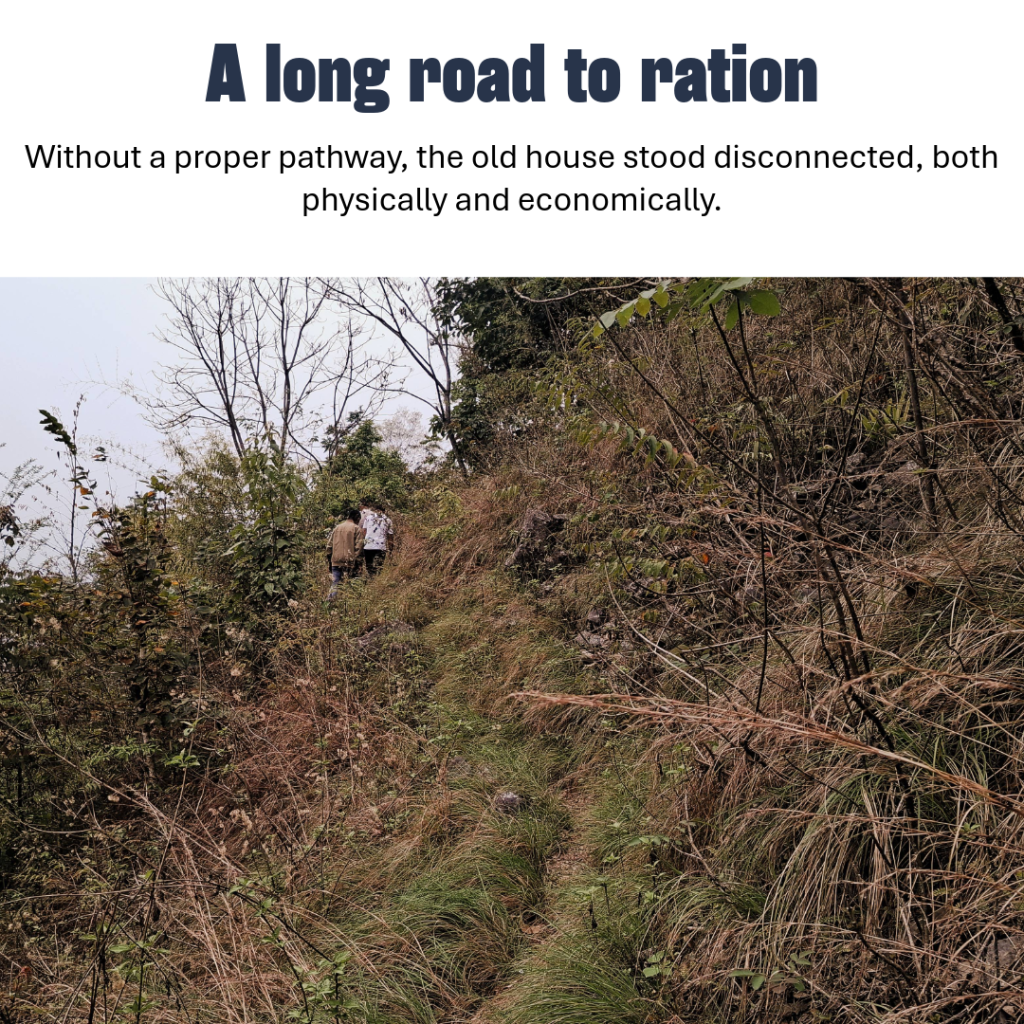
Nar Maya Rai’s case was a textbook example of this structural gap. Despite meeting all other criteria of poverty status, domicile eligibility, and genuine need, she stood on the verge of exclusion because she did not own land. What followed was not procedural, it was personal.
An Unusual Intervention
Moved by her situation and her words, Panchayat President Suren Rai made a decision that went beyond administrative duty.
He chose to buy land for her.Using his personal earnings, he arranged ₹2 lakh to purchase a plot in her name. The payment was made over two years in three installments. ₹50,000, ₹1 lakh, and a final ₹50,000. The land belonged to Bhim Bahadur Rai of Kopchey, a brother of Nar Maya Rai.
Following the first installment, he allowed the land parcha (legal document) to be initiated in her name.
The transaction was not informal or hidden. It took place in the presence of community witnesses, including members of the Sayabung Samaj of Kopchey and both families involved, ensuring transparency and collective acknowledgment.
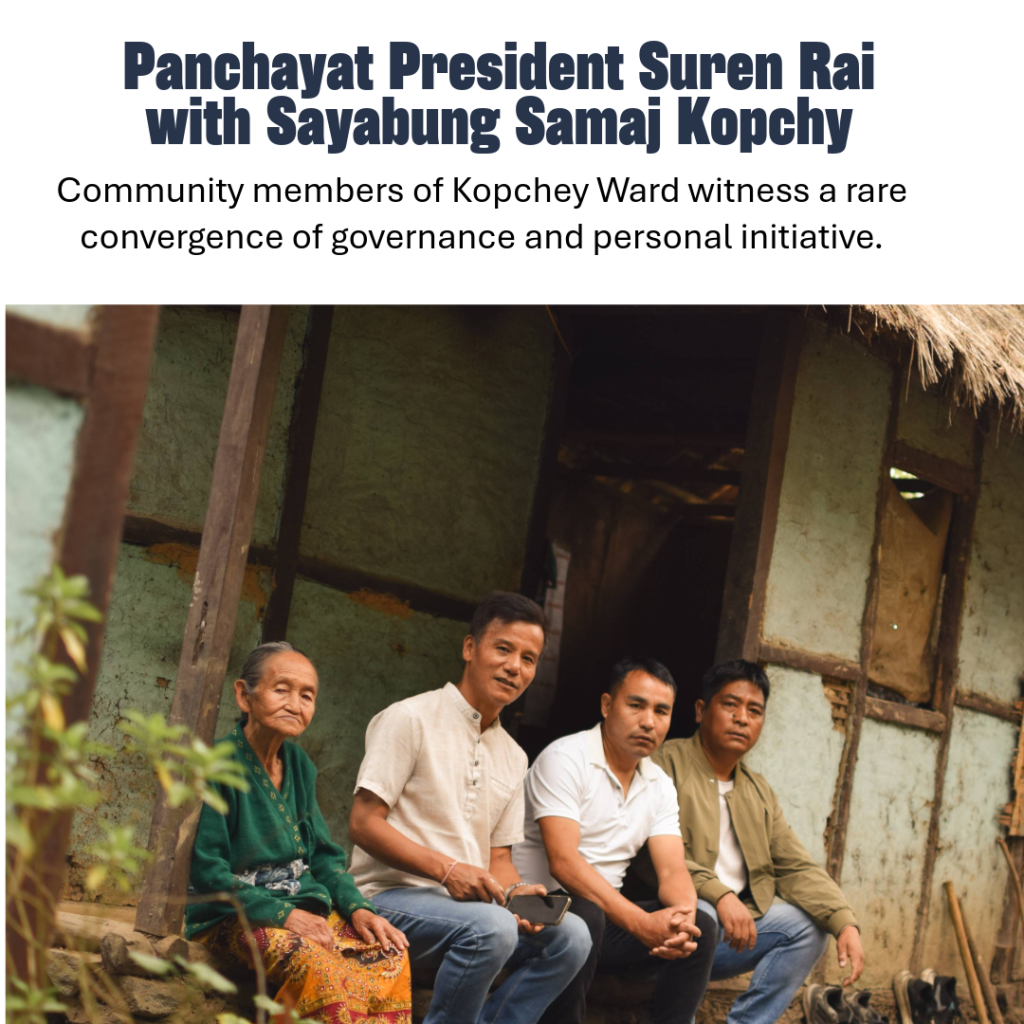
Deepak Rai, President of the Sayabung Samaj, later described the act as exemplary, noting that such contributions reflect a consistent pattern of social service. And that it is not the first time Suren Rai has helped the locals.
Completing the Circle
On April 17, the final installment of ₹50,000 was paid, completing the ₹2 lakh transaction. With that, the land was officially registered under Nar Maya Rai’s name. And for the first time in her life, she held a land parcha.
It was more than a document. It was a transition from dependency to ownership, from uncertainty to security. With land ownership secured, the pathway to SGAY support became clear.
Construction of her new home progressed steadily and is now nearing completion.
A New Home, A New Beginning
Nar Maya Rai’s new house stands in sharp contrast to her previous dwelling. Located near a motorable road, the structure is built with concrete, offering durability and safety. It is equipped with essential furnishings, aligning with SGAY provisions. Accessibility, which once required a strenuous walk, is now immediate. She will move into the new house with her eldest son, Sandeep Rai.
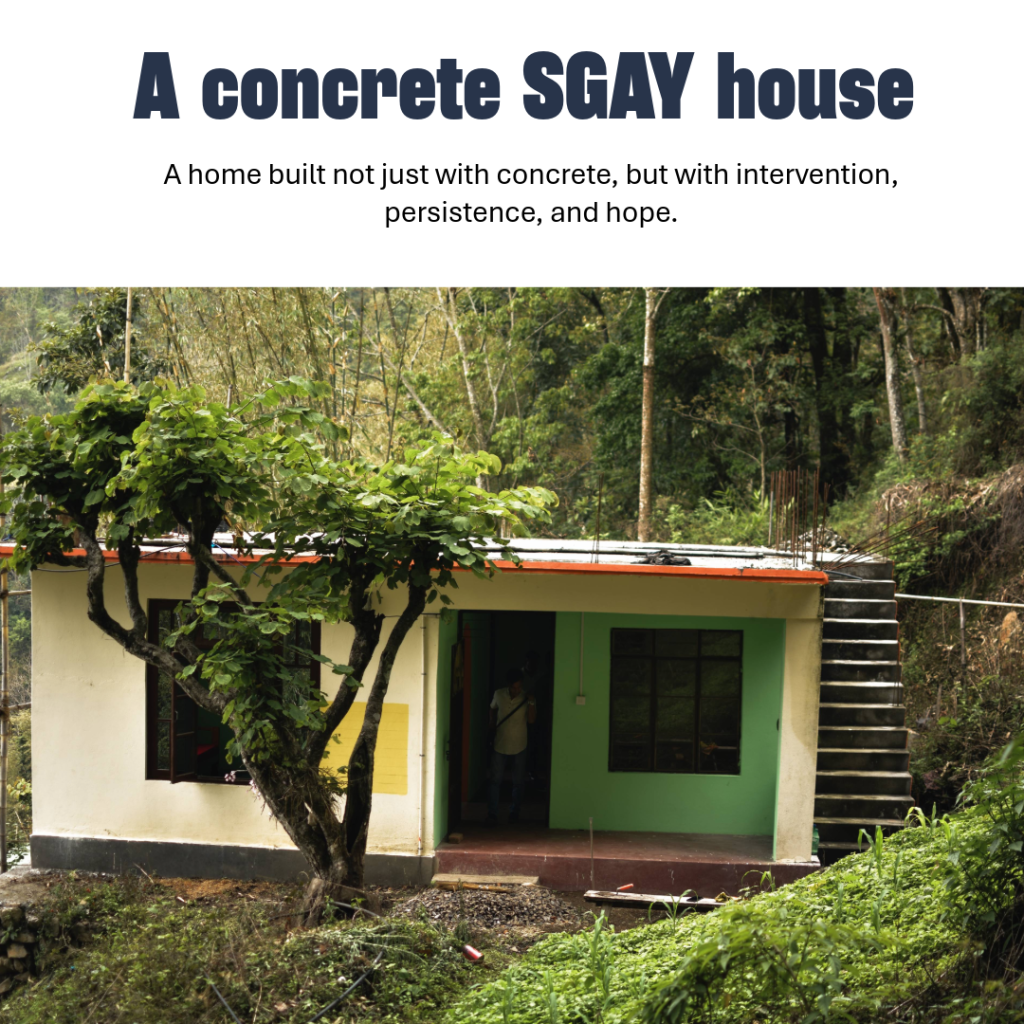
When visited on April 17, she stood at the construction site, visibly overwhelmed. Words failed her, but gratitude did not.
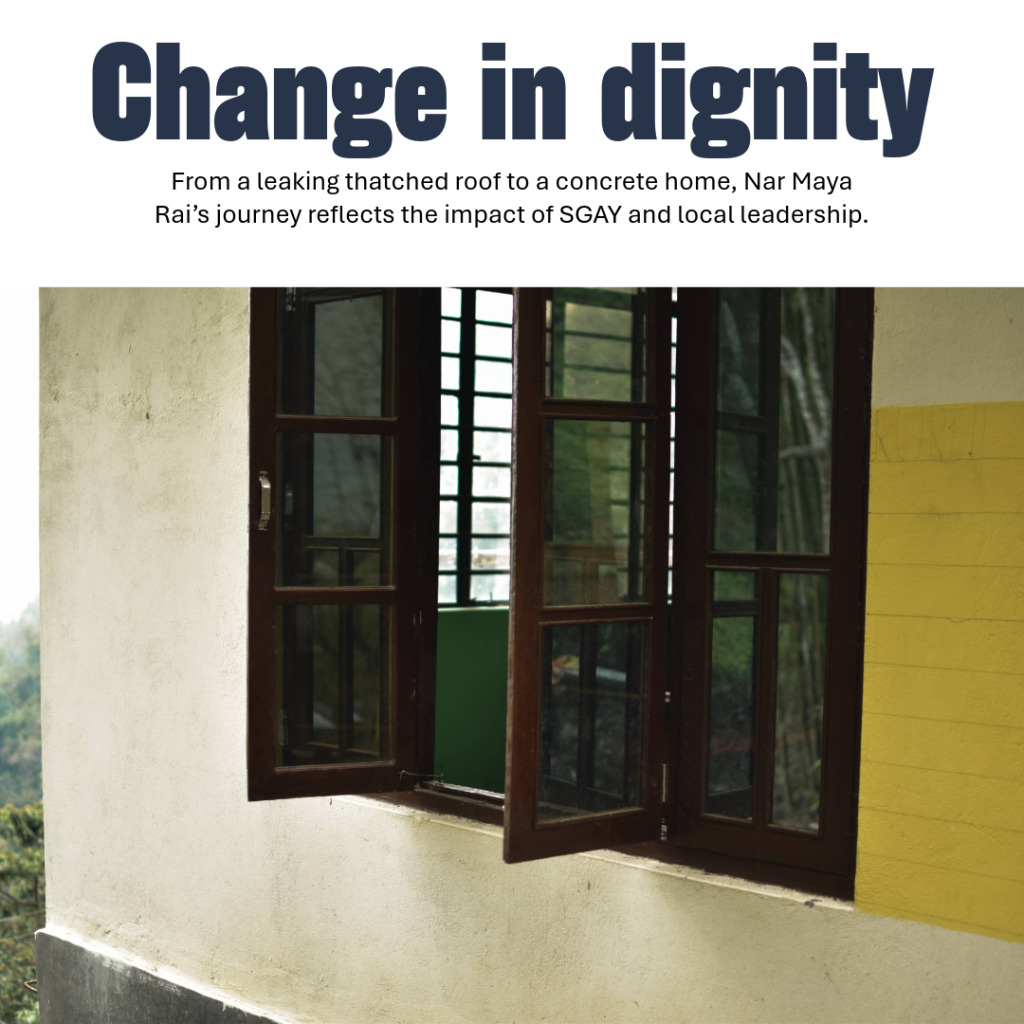
She repeatedly thanked Panchayat President Suren Rai and expressed her appreciation to the Chief Minister of Sikkim, PS Tamang (Golay), for enabling the scheme that made her home possible.
Leadership at the Grassroots
For Suren Rai, the intervention reflects a broader philosophy of governance. He attributes his actions to the environment created under the current state leadership, stating that such work is possible within the framework and inspiration provided by the government. He aligns his initiative with the vision of building a ‘Sunaulo, Samriddha, and Samartha Sikkim.’
From Kopchey Ward, eight individuals were identified as beneficiaries under SGAY this time. According to him, around 95 percent of those requiring permanent housing in the ward have now been covered. Nar Maya Rai is the first among them to complete construction.
Beyond a Single Story
While Nar Maya Rai’s journey is deeply personal, it also carries broader implications.
It demonstrates the power of convergence. Where state-sponsored welfare schemes intersect with localized governance and individual initiative. SGAY provided the structure and funding amd panchayati leadership provided flexibility and intervention. Together, they bridged a gap that policy alone could not.
This case also raises important questions about eligibility frameworks. How many potential beneficiaries remain excluded due to rigid criteria such as land ownership? And how can systems evolve to accommodate the lived realities of rural populations?
The Human Factor in Governance
At its core, this story is about the human factor in governance. Policies are designed to scale. They operate through rules, categories, and eligibility checklists. But lives are rarely that structured.
What distinguishes Nar Maya Rai’s case is not just that she received a house. But that someone recognized the gap between policy and reality, and chose to act.
It is a reminder that governance is not only about administration. It is also about empathy, discretion, and responsibility.
A Quiet Transformation
As construction nears completion, Nar Maya Rai prepares to leave behind the house where she spent most of her life.
The old structure still stands. Weathered, fragile, and isolated. It tells a story of endurance. The new house, by contrast, tells a story of transition.
Between the two lies a journey shaped by persistence, community, and an intervention that turned possibility into reality.
For Nar Maya Rai, the shift from kachcha to concrete is not just architectural. It is existential.
A Model Worth Noticing
In policy discussions, success stories are often measured in numbers. The number of houses built, beneficiaries covered, funds allocated. But sometimes, a single story reveals more than statistics can.Nar Maya Rai’s journey highlights how targeted welfare, when combined with responsive local leadership, can produce outcomes that are both efficient and humane.
It underscores the potential of Panchayati Raj institutions not just as administrative units, but as facilitators of inclusion.
And it offers a simple but powerful insight: when systems make space for human intervention, they become capable of reaching those who stand just outside their boundaries.
For more stories on people, places, and cultural transformations from across the Himalayas, subscribe The Himali Journal.