


Invasive Pines Make Way for Native Forests in Namchi Hills

Namchi | Sikkim

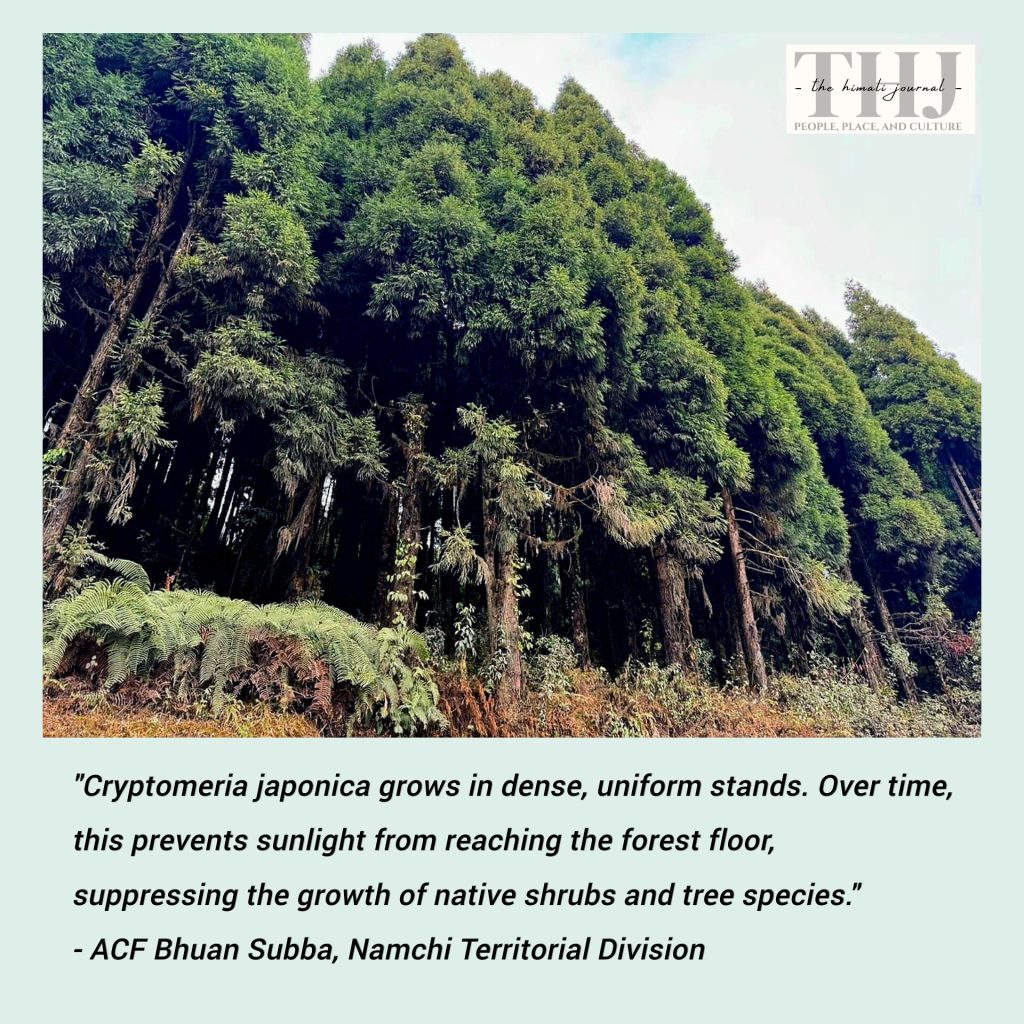
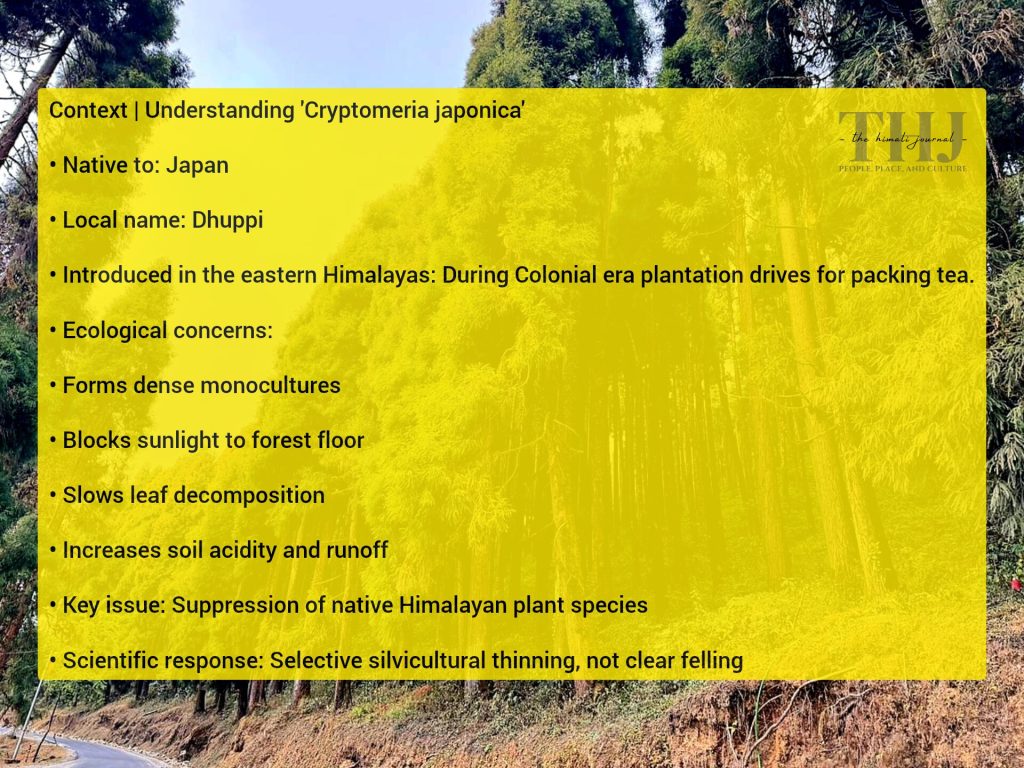
The species, Cryptomeria japonica, (locally known as dhuppi) has formed dense monocultures across several reserved forests in Namchi district, outcompeting indigenous vegetation and altering soil and water dynamics. Under the department’s approved Working Plan, Forest Department, GoS, the Namchi Territorial Division has initiated silvicultural thinning in ecologically stressed forest patches.
Following assessment and enumeration, five Reserved Forests across four territorial ranges have been identified as requiring intervention. Sadam and Tendong Reserved Forests under Namchi Territorial Range, Nagi RF under Namthang Range, Rayong Reserved Forest under Rabong Range, and Lingi Reserved Forest under Lingmoo Range.
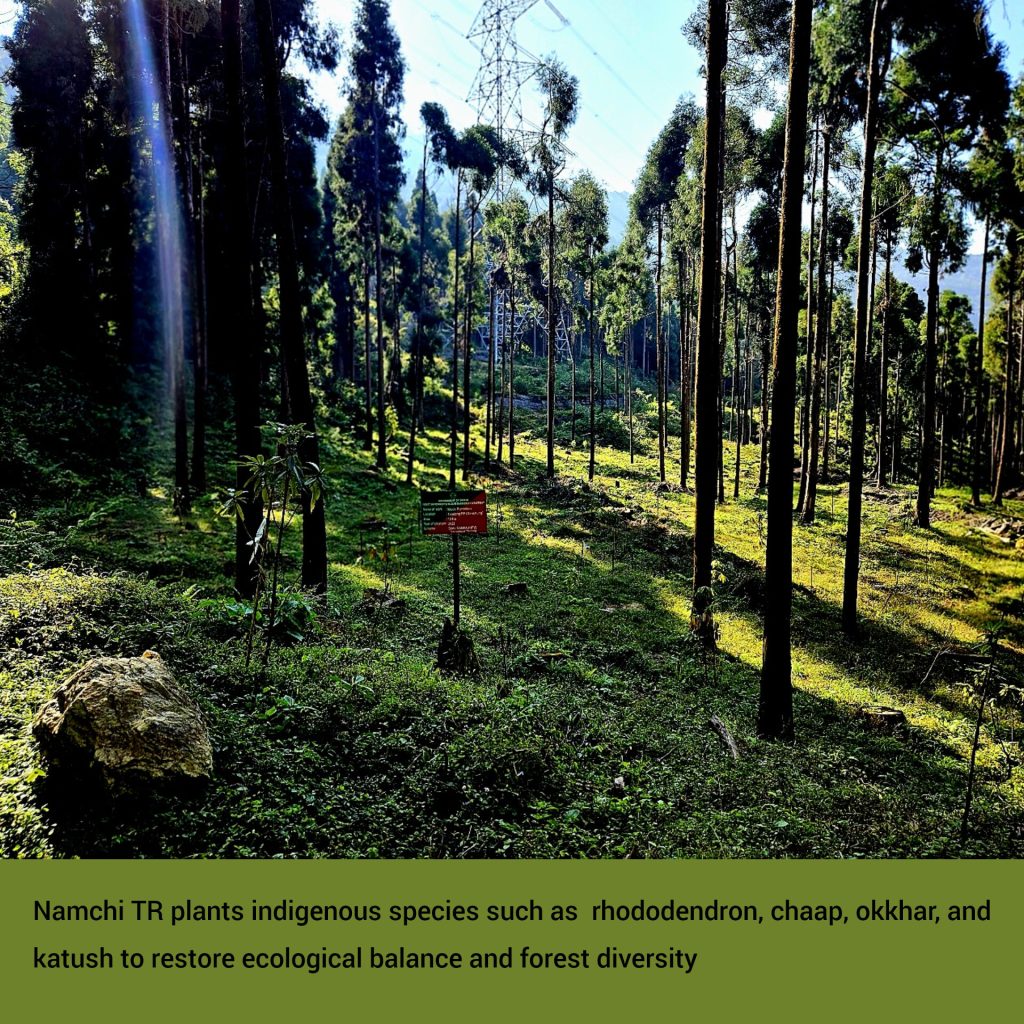
Following thinning operations, the cleared areas will be replanted with indigenous species such as rhododendron, chaap, okkhar, and katush to restore ecological balance and forest diversity. While the rhododendron and chaap increases beautician of forests beneficial for eco-tourism, okkhar and katush helps in forest ecosystem by providing nuts for wild animals.
Bhuan Subba pointed out that the impact of Cryptomeria japonica is not limited to vegetation loss. The species is associated with slow decomposition of leaf litter, increased surface water runoff, and a gradual rise in soil acidity, all of which negatively affect soil profile and biodiversity.
The thick leaves of this species of trees is also known to use high amount of water from the ground, which leads to the drying up of local water sources. And it also makes the areas vulnerable to forest fire by making it difficult in controlling them.
According to the ACF of the Division, tree marking and enumeration were completed prior to the issuance of a legal auction notice for timber. Which was a week before the beginning of tree felling.

According to ACF Subba, the sale of timber will generate revenue for the government while also creating employment opportunities for skilled local labourers.
Clarifying concerns over tree felling, Subba distinguished the operation from the ‘clear felling coupe (CFC)’ method practiced in parts of Darjeeling and Kalimpong.
“Cryptomeria japonica does not regenerate through coppicing. Clear felling would be ecologically damaging. That is why silvicultural thinning is the scientifically recommended approach,” he said.
ACF Subba also shares that in similar thinning exercises conducted in the past in other parts of the District have not resulted in harm to wildlife or the local ecosystem. On the contrary, enhanced undergrowth and improved forest structure have been observed in treated areas. Several sections of society have also appreciated the Namchi Territorial Division’s efforts toward forest restoration and landscape rejuvenation.