


Support us.

Subscribe to our newsletter to help bring more articles from the Himalayan state.

Environment issues

Citizens Invoke ‘Do or Die’ in Sikkim, Demand Scientific Policy on Community Dogs
Gangtok/Namchi, January 4, 2026:

Invoking Mahatma Gandhi’s historic call of “Do or Die” as a symbol of non-violent resistance, citizens in Gangtok and Namchi joined a nationwide peaceful mobilisation on Saturday. Demanding, that governments abandon fear-driven dog-control measures and adopt scientific, lawful, and humane policies to protect public health.

The coordinated protest takes place all over the country, during different hours of January 04; amid growing alarm among public-health experts, veterinarians, and scientists over proposals that favour mass removal, relocation, or confinement of community dogs approaches. Widely criticised as unscientific, illegal under existing animal-welfare laws, and counter-productive to rabies control.

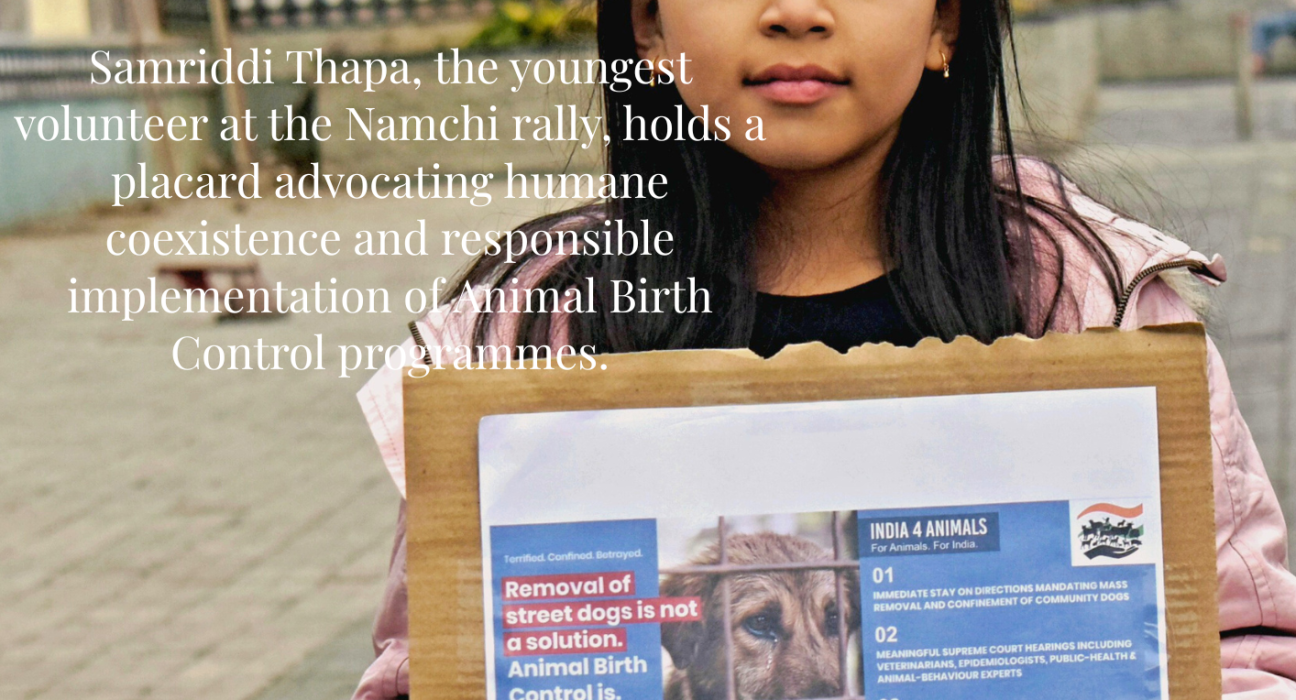
Samriddi Thapa, the youngest volunteer at the Namchi rally, holds a placard advocating humane coexistence and responsible implementation of Animal Birth Control programmes

Over 2,000 citizens, including doctors, scientists, veterinarians, journalists, and public figures, have signed an open letter warning against mega-shelter models. They imply it poses serious public-health risks, cause ecological disruption, and impose heavy financial burdens on civic bodies. Especially without evidence of improved public safety.
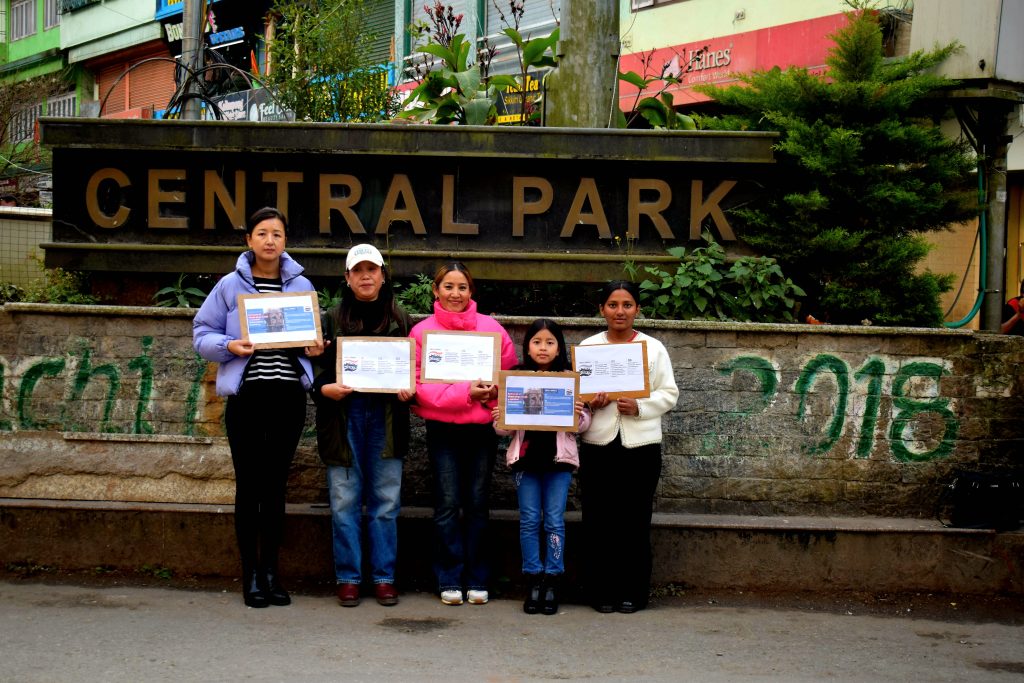
Participants gather at Central Park, Namchi, as part of the nationwide ‘Do or Die’ mobilisation demanding evidence-based governance and lawful rabies-control measures.

In Sikkim’s fragile hill towns, experts caution that large-scale confinement would strain municipal resources while undermining the only method proven to reduce rabies: Animal Birth Control with Anti-Rabies Vaccination (ABC–ARV / CNVR).

Law Exists, Implementation Does Not

Specialists stress that ABC–ARV is mandated by Indian law and globally recognised as the most effective strategy for managing free-roaming dog populations. Yet in the country, the programme has never been implemented at the scale or consistency required.

“The crisis is not caused by science failing, but by governance failing to implement science,” Neelam Subba, India 4 Animal, Animal Rights, said during the rally.

She shares that the professionals warn that removing vaccinated dogs creates population gaps, leading to rapid influx of unvaccinated animals increasing, and not reducing rabies risk.

Peace Rallies in Gangtok and Namchi

As part of the nationwide ‘Do or Die’ peace gathering, a few citizens assembled at MG Marg, Gangtok, and Central Park, Namchi, from 1:00 pm on January 4, calling for transparency, data-driven planning, and accountability from urban local bodies.
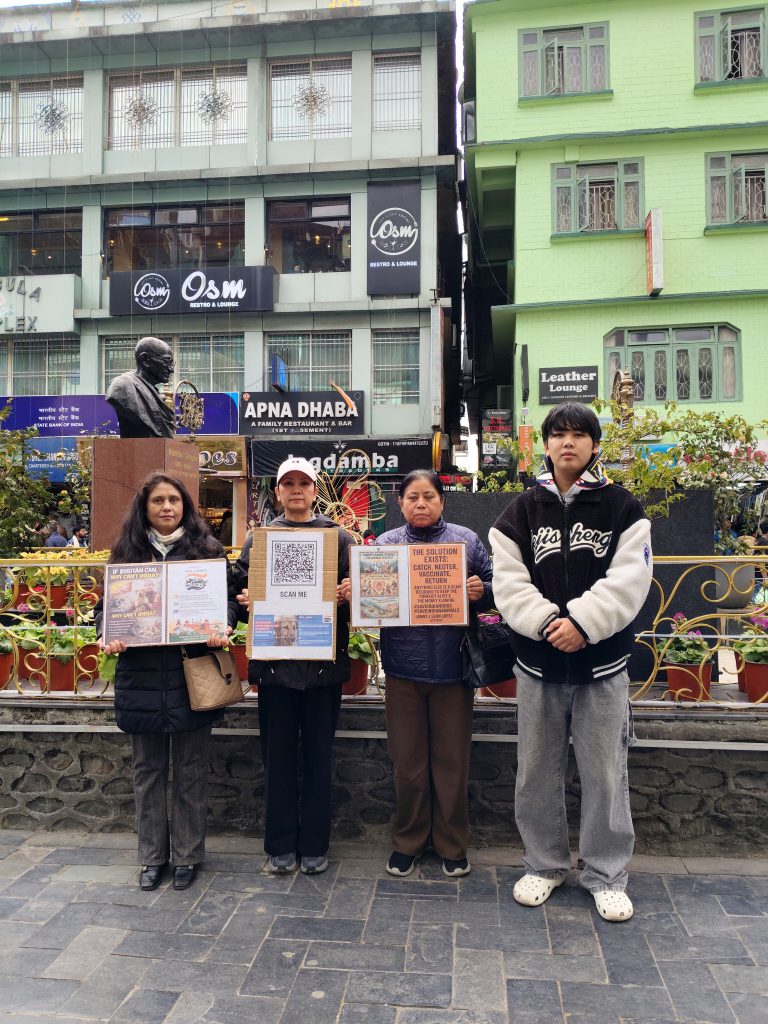
Citizens hold placards during the ‘Do or Die’ peace rally at MG Marg, Gangtok, on Saturday, calling for scientific and humane community dog policies through effective ABC–ARV implementation.

“This protest is not against public safety,” they say. “It is a call to protect it through science, compassion, and lawful governance”, they shared.

While maintaining that the relocation and confinement are not solutions. What Sikkim needs is a strong, transparent ABC programme with anti-rabies vaccination. “This planet belongs to all of us, and theirs too,” Subba says.


THJ

THJ

About Author

About The Himali Journal The Himali Journal - People, Place and Culture is an independent digital publication dedicated to documenting the diverse stories, landscapes, traditions, and communities of the Himalayan region. Founded with a commitment to meaningful storytelling, The Himali Journal explores the lives of people, the character of places, and the richness of culture across the eastern Himalayas and beyond. Our coverage spans Sikkim, Darjeeling, Kalimpong, Siliguri, the Dooars, and other mountain and foothill regions where heritage, identity, and change intersect. We believe that every community has stories worth preserving. Through feature articles, interviews, photo essays, documentaries, travel narratives, cultural reports, and environmental journalism, we seek to record voices that are often overlooked by mainstream media. Our Focus People Stories of individuals, communities, livelihoods, traditions, achievements, and everyday life. Place Explorations of villages, towns, landscapes, sacred sites, heritage locations, and destinations that shape regional identity. Culture Documentation of festivals, oral histories, indigenous knowledge, language, art, music, cuisine, rituals, and living traditions. Our Mission To create an accessible archive of Himalayan life by producing accurate, thoughtful, and visually engaging journalism that informs, educates, and inspires future generations. Our Vision To become a trusted platform for documenting and celebrating the human and cultural diversity of the Himalayan region while encouraging dialogue, understanding, and preservation of local heritage. At The Himali Journal, we believe that understanding a region begins with understanding its people, its places, and its culture. The Himali Journal People, Place and Culture

Leave a comment

Your email address will not be published. Required fields are marked *

You may also like

Environment issues

Declining Fish Populations in Sikkim: A Growing Concern for Conservation

  • April 1, 2025
The recent awareness program on ‘Responsible Angling’ at River Rangeet, organized by the Directorate of Fisheries, Government of Sikkim, shed
Environment issues

UCS Temi Carries Out Plantation Drive In The Two Areas Of The Constituency

  • July 28, 2025
In a supporting step towards environmental stewardship, the United Christian Society, Temi (UCS), convened a plantation drive at Rukum and