

SSACS Creating HIV and AIDS Awareness In Sikkim
The topic of Human Immunodeficiency Viruses (HIV) and Aquired Immuno Deficiency Syndrome (AIDS), is a taboo in the village life of the Hills. When someone gets diagnosed of AIDS, they usually tend to hide it from the rest of the society. Their families also hide it from the eyes of others, because everyone in the family will be judged by the others as contagious.
Sikkim State AIDS Control Society (SSACS)
Sikkim State AIDS Control Society (SSACS), is working under National AIDS Control Organisation (NACO) curriculum, to bring about the awareness amongst the people. SSACS is also a project under Health and Family Welfare Department, Government of Sikkim.
The Assistant Director of Youth Division of SSACS, Phoor Tshering Lepcha, says that the spread of HIV is mostly present in the youths. The age of 20 to 29 years are more susceptible to the disease, therefore SSACS is targeting awareness on the younger generation.
For many years, SSACS is targeting school and college students, and have not left behind the dropouts. They are reaching out to organizations and societies to spread awareness to any youth who work there.
SSACS Programmes on HIV and AIDS
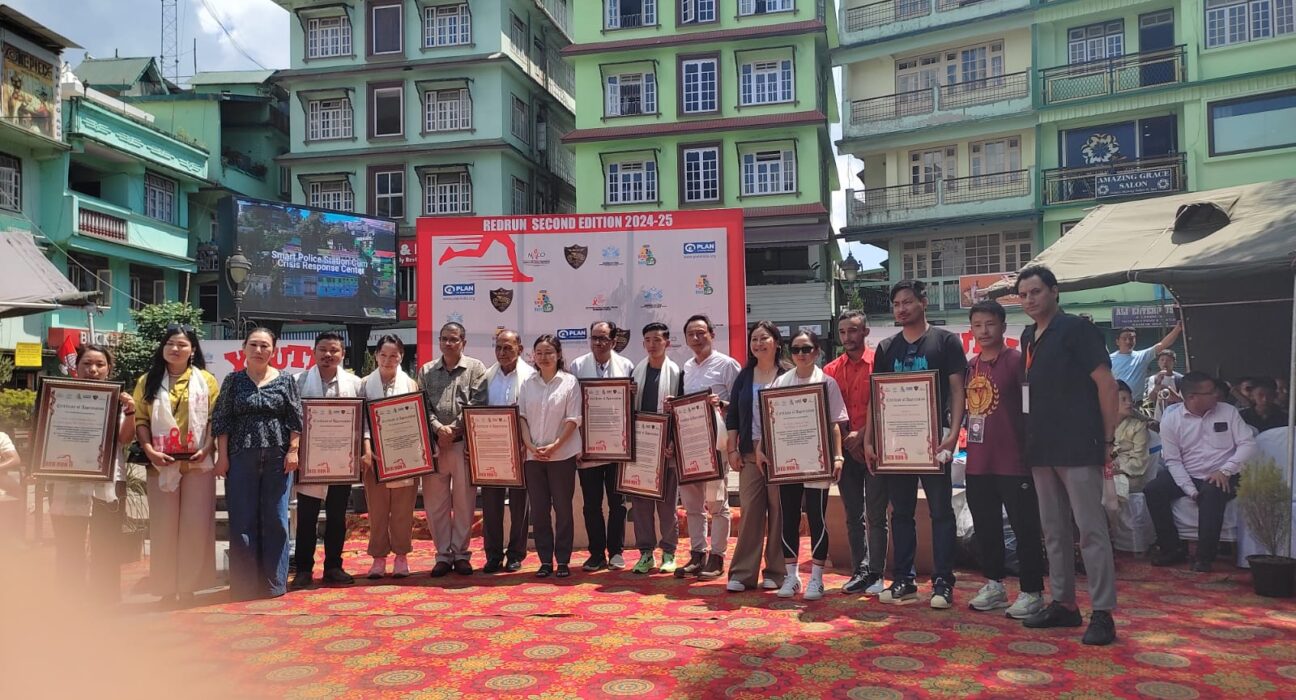
To spread the awareness in public, SSACS – Youth Division, has taken over two vital programmes viz, Marathon, known as the Redrun), and quiz competition. These two events allow the spread of awareness on HIV and AIDS to wider audiences. The Youth Division allows only the RRC members to participate in the events. The exceptional participants get to take part in regional, national and even international platforms.
There are various other programmes of SSACS which are in implementation in the state.
The adolescence education programme (AEP) of SSACS are implemented by State Council of Educational Research and Training, Sikkim (SCERT Sikkim). The awareness through academic syllabus can reach the younger generation in mass.
SSACS has Red Ribbon Club (RRC) in the schools and colleges comprising of model teachers and student members. The idea of RRC is mainly to create a space for youths to share their problems with the peers.
While AEP and RRC are the most active programmes of SSACS, it is still not reaching to all. That is why SSACS work with the other programme of – Out of School Youths, to reach the dropouts and working youths of the state.
Along with it is the programme of College and School Intervention wherein, SSACS carry out various activities for awareness on HIV and AIDS. Some of those programmes are related to the disease very closely. Such as, substance abuse, adolescence education, voluntary blood donation and life skills.
SSACS Awareness on HIV and AIDS
The Project Director of SSACS, Dr. Deki Wangmu Phempu, says that the good practices make person a good citizen. Although this is a great statement in general, Dr. Phempu was exactly aiming to make listeners understand the mindset of a person on HIV and AIDS.
She wants people, even the younger generation, to understand the limitations of monogamy and other closely related subjects to HIV and AIDS.
The only four basic modes of transmissions of HIV and AIDS are; unprotected sex, sharing infected needle and syringes, infected blood and blood products and infected parents to unborn child.
SSACS teaches the difference between HIV and AIDS and states that they are controllable but not curable.
However, it is still safe to kiss, hug, sharing clothes and visiting the house of an infected person. The discrimination which has led to the stigmatized villages, must know this, Dr. Phempu in Namchi has said.
Medication and Mental Health
The mental health issues of the diagnosed patients is another adversary. The lifelong medication of HIV and AIDS have caused loneliness and depression in many villagers. Dr. Phempu says that the lifelong medication is not new to HIV and AIDS only. They also exist for thyroid and diabetes patients, she says.
The medication of HIV and AIDS can reduce the infection to undetectable infection. And the infections that are undetectable is equal to untransmissable (u=u), Dr. Phempu says. Many patients who have undergone the medications are living successful lives of having kids, marrying and getting jobs, she says.