

From Rock Bottom to Recovery: Agrim’s Journey of Recovery

In quiet circles, conversations unfold that rarely enter public discussion. Some voices tremble, others pause between sentences, and a few remain silent, gathering courage. Among them is Agrim, not a patient seeking help, but as someone offering it.
As a homemaker and a family man, Agrim describes himself with a single word: recovering.Two years into sobriety in 2026, he does not claim completion. Recovery, he says, is a daily practice shaped by memory, discipline, and support.
His story reveals addiction as more than substance use, a narrative of belonging, loss, denial, acceptance, and gradual rebuilding.
The Desire to Belong: Where It Began
Agrim’s journey traces back to his school years, a period marked by friendship, identity formation, and subtle social pressures. Like many adolescents, he wanted recognition, to feel noticed, confident, and accepted.
When seniors introduced him to marijuana, locally known as mastah, the moment felt less like risk and more like inclusion.
“I didn’t take joints to become an addict,” he recalls. “I just wanted to fit in.”
At the time, substance use appeared social and harmless. Yet the emotional fulfilment he expected never arrived, quietly prompting experimentation beyond initial boundaries.
Escalation: Searching for Something More
As marijuana failed to provide the sense of belonging Agrim sought, experimentation extended to stronger substances, eventually leading to brown sugar use.
The progression occurred gradually, through decisions that seemed manageable individually but transformative collectively.
Over time, consequences surfaced. Relationships with family became strained, communication grew guarded, and emotional distance entered his marriage. Parallel to personal challenges, professional instability emerged. Businesses and startups he had pursued began to falter as addiction undermined consistency and focus.
Financial pressure followed, pushing him toward the brink of bankruptcy. Loss, Agrim says, accumulated quietly.
Finding Recovery: The Role of Community
Exhaustion from repetition and consequence led Agrim to a fellowship group. Entering hesitantly, he encountered stories that mirrored his own experiences of denial, secrecy, relapse, and hope.Within this shared space, isolation diminished gradually.
“Everyone faces challenges,” he says. “But addicts need guidance and support.”
Recovery began as possibility rather than certainty, supported by community understanding rather than individual willpower alone.
Withdrawal: The Physical Battle
Withdrawal remains one of Agrim’s most vivid memories.
When substance use stopped, his body reacted intensely: diarrhoea, vomiting, headaches, sweating, nausea, insomnia, and anxiety. Time slowed under the weight of discomfort.
“The doses felt like my lifeline,” he says
As finances depleted, desperation reshaped behaviour. He lied, manipulated, and stole from loved ones. His actions he deeply regrets today.
The most painful memory remains selling a gold bracelet he had bought for his newborn son.
In withdrawal, survival overshadowed values.Eventually, drug use shifted from pursuit of pleasure to avoidance of suffering, reinforcing dependency.
Denial and Acceptance
Before acknowledging addiction, Agrim experienced denial. Concern from others felt exaggerated, and responsibility appeared external.
“You would be lying to yourself,” he reflects.
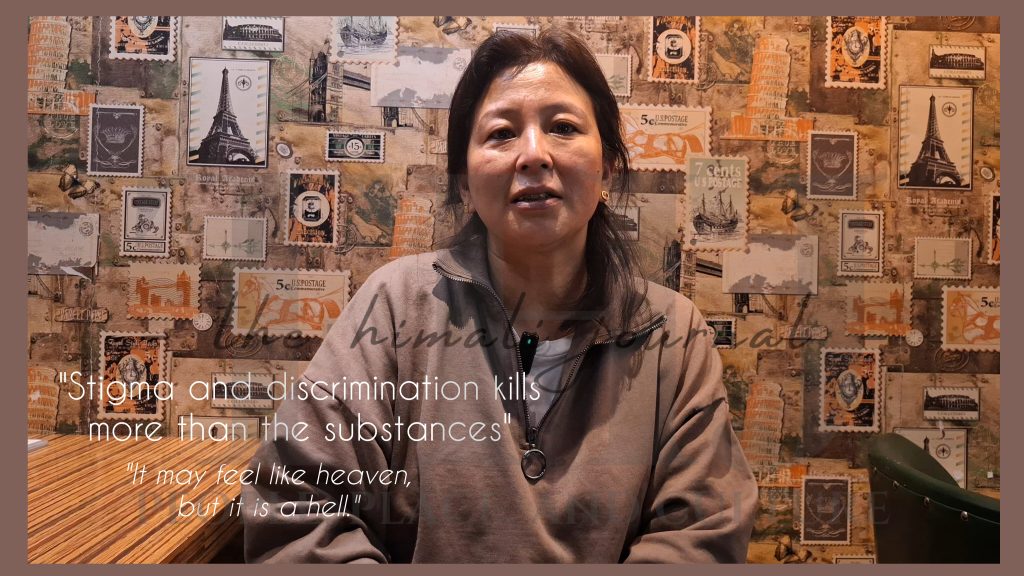
Acceptance emerged only after cumulative losses dismantled denial’s protection. Although his family offered support, self-acceptance required longer adjustment, particularly in social environments where stigma and self-consciousness persisted.
“It was my reality,” he says. “And I had to accept it.”
Life After Addiction: Purpose and Service
Today, Agrim works in a rehabilitation centre, supporting individuals navigating recovery journeys similar to his own. His lived experience enables empathy grounded in understanding rather than theory.
Community service and intentional self-care practices reinforce his sense of purpose.
Recovery, for Agrim, is no longer solely about abstinence but about meaningful living.
Relapse: The Shadow of Recovery
Agrim’s journey includes relapse, which he now understands as a process rather than a single event. After five years of sobriety, he returned to substance use, an experience that reshaped his perspective.
Before relapse occurred physically, it manifested emotionally through anger, isolation, ego-driven thinking, and negativity.
“Relapse is my shadow,” he says. “It walks with me every day.”
This awareness emphasises the importance of support networks and continuous self-reflection.
Prevention Through Lifestyle
Agrim identifies everyday habits as central to relapse prevention. Consistent sleep patterns, physical exercise, social connection, personal hygiene and meditation practice.
Addressing these areas stabilises emotional wellbeing and reduces vulnerability. An active and healthy lifestyle, he explains, is his prevention methods.
A Message to Others
Reflecting on his journey, Agrim offers a simple but urgent message.
“It is dark, painful, and full of suffering. The first dose does the damage.”
His perspective underscores the importance of early awareness, supportive environments, and open conversations about addiction.
Addiction, he says, does not discriminate people based on their statuses.
Recovery as Practice
Two years into sobriety, certainty remains absent, but meaning persists through routine, connection, and purpose. His story continues. One day at a time.